Upright bikes for errands under three miles, covering fit, gearing choices and what a few years of ownership adds up to
First ride felt wrong? How to check saddle height, reach and standover before you blame the bike
One speed, three speeds, or seven? Let the hills on your actual route decide
A block-by-block look at coaster brakes, internally geared hubs and derailleurs on gear range, service intervals, and how steel rims behave in the rain.
Buying a used upright for $150? Here's what wears out first and what three years actually costs
A forensic walk through the consumables on a comfort bike, the damage that makes a cheap used frame not worth rescuing, and the checks to make before money changes hands.
Short trips, flat streets, a bag of groceries. When an upright bike is the cheaper answer
Swept bars and a feet-forward seat tube are a set of engineering choices, not a look, and trip length, grade and load decide whether they pay you back.
An inseam measured with a hardcover book pulled firmly up between the legs is more repeatable than a pants measurement. Take the largest of three attempts, since most people pull too gently the first time.
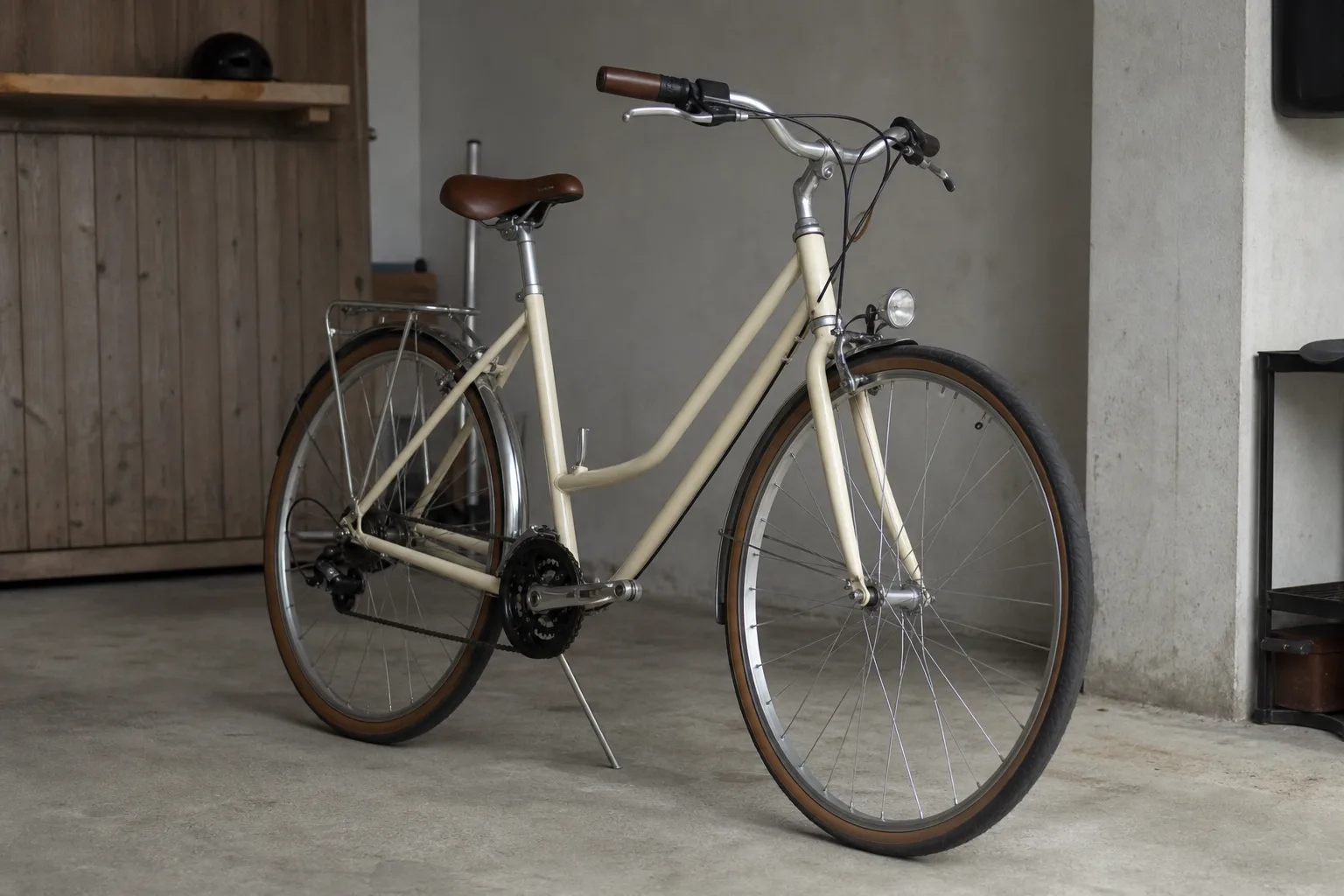
A seven-speed upright cruiser came home in a hatchback last spring, assembled at the shop, tires at 45 psi, saddle clamped wherever the mechanic had left it. The first ride out of the parking lot was miserable: knees aching within four blocks, wrists numb, a wobble every time the rider looked over a shoulder. Nothing was broken. The saddle sat two inches too low, the bars had been rotated back toward the rider during shipping, and the tire pressure was fine for a curb but harsh for a rough road. All three were free to fix, and the fix took eleven minutes in a driveway.
Measure the inseam before you touch the bike
Stand against a wall in the shoes you actually ride in, feet about six inches apart, and pull a hardcover book up into your crotch until it stops the way a saddle would. Have someone mark the top edge of the book on the wall, then measure from that line to the floor. Do it three times and take the largest number, because most people under-pull on the first try. That figure, usually somewhere between 26 and 34 inches for adults, is the only body measurement worth trusting on a fit conversation, and it is the number a shop should ask for before it hands you a frame size.
Why the usual saddle height rule misses on an upright
The standard advice, roughly 0.883 times inseam measured from pedal spindle to saddle top, was written for road bikes where the bottom bracket sits almost directly under the hips. Upright comfort frames push the crank forward, sometimes four or five inches, so you pedal at an angle rather than straight down. That geometry lets you touch the ground at a stop with the saddle still high enough to extend your leg, which is the whole point, but it also means measuring straight down from the saddle nose gives you a number that is short. Measure along the seat tube, in line with the post, and expect the finished saddle to sit higher off the ground than instinct wants.
The working check is simpler than any formula. Sit on the saddle, put a heel on the pedal at the bottom of the stroke, and pedal backward a half turn. Your leg should reach nearly straight with your hips staying level, no rocking side to side. Move the post in quarter-inch steps, ride a block between each, and stop when the ache behind the kneecap disappears. On a pedals-forward frame that final position frequently puts only the balls of your feet down at a stop, which is normal and safe, and which most riders learn to like within a week.
Reach and standover, checked the same afternoon
Reach is the horizontal distance from saddle to grips, and on an upright it should leave your elbows softly bent with your torso at roughly sixty to eighty degrees from level. Two signs it is wrong: numb outer fingers, meaning too much weight forward, or a sore lower back from sitting bolt upright and reaching down. Standover is measured with the bike between your legs, both feet flat, and the Consumer Product Safety Commission oversees bicycle safety requirements including the reflectors and brake performance you will find on any new complete bike. On a step-through frame standover simply stops being a constraint, which is why so many short-trip riders end up on one.
What parts fix, and what they do not
A seatpost swap solves saddle height in both directions: a 350mm post buys height for a long-legged rider on a small frame, and a shorter post or a lower-rise saddle rail clamp drops a tall frame closer to usable. A stem swap, or on a threaded quill setup a taller quill, changes reach by roughly an inch either way and changes bar height by two or three. Rotating the bars in the clamp is free and often enough. Grip shape and bar sweep fix hand numbness more reliably than anything else, and a saddle with the right rail length lets you slide fore and aft an inch.
What none of that fixes is a frame whose top tube is genuinely too long or a standover height you cannot clear. If your saddle is already slammed forward on the rails and a short stem still leaves you stretched, the frame is wrong and no part changes that. Ride the next size down before you spend on components.
Write your final numbers on masking tape inside the seat tube collar. When the post slips or a shop reassembles the bike after a tune-up, you rebuild the fit in two minutes instead of another bad week.