Upright bikes for errands under three miles, covering fit, gearing choices and what a few years of ownership adds up to
Buying a used upright for $150? Here's what wears out first and what three years actually costs
First ride felt wrong? How to check saddle height, reach and standover before you blame the bike
A step-by-step check of inseam, saddle height and reach on a pedals-forward upright bike, and which fit complaints a stem or seatpost swap can actually fix.
One speed, three speeds, or seven? Let the hills on your actual route decide
A block-by-block look at coaster brakes, internally geared hubs and derailleurs on gear range, service intervals, and how steel rims behave in the rain.
Short trips, flat streets, a bag of groceries. When an upright bike is the cheaper answer
Swept bars and a feet-forward seat tube are a set of engineering choices, not a look, and trip length, grade and load decide whether they pay you back.
A drop-in chain checker costs a few dollars and pays for itself the first time it stops you from buying a bike that needs a full drivetrain. Measure before you agree on a price, not after.
A step-through hybrid appeared on a driveway sale one Saturday, aluminum frame, seven-speed twist shifter, swept-back bars, upright saddle worn shiny on the nose. The asking price was low enough that the seller expected no argument, and the bike looked whole: air in both tires, brakes that squeezed, a chain that turned. Twenty minutes with a ruler, a rag and two fingers on the cranks turned up close to the purchase price in parts that had already reached the end of their life, and one that had not. That distinction, between worn out and ruined, is the whole game with used comfort bikes.
1. The chain goes first, and it takes the cassette if you let it
On a bike ridden two or three miles a day in city grit, the chain is the fastest-moving consumable, and it stretches at the pins long before it looks bad. A chain checker or a steel ruler across twelve links tells you in seconds whether you are buying a chain or a drivetrain, because a chain left past its wear limit files the cassette teeth into hooks and then skips under load on every replacement chain you fit afterward. A chain alone is a small, single-digit-to-low-double-digit part. A chain plus cassette plus labor is several times that, and on a neglected bike you should assume the larger number.
2. Tires and tubes, and the rim hiding under them
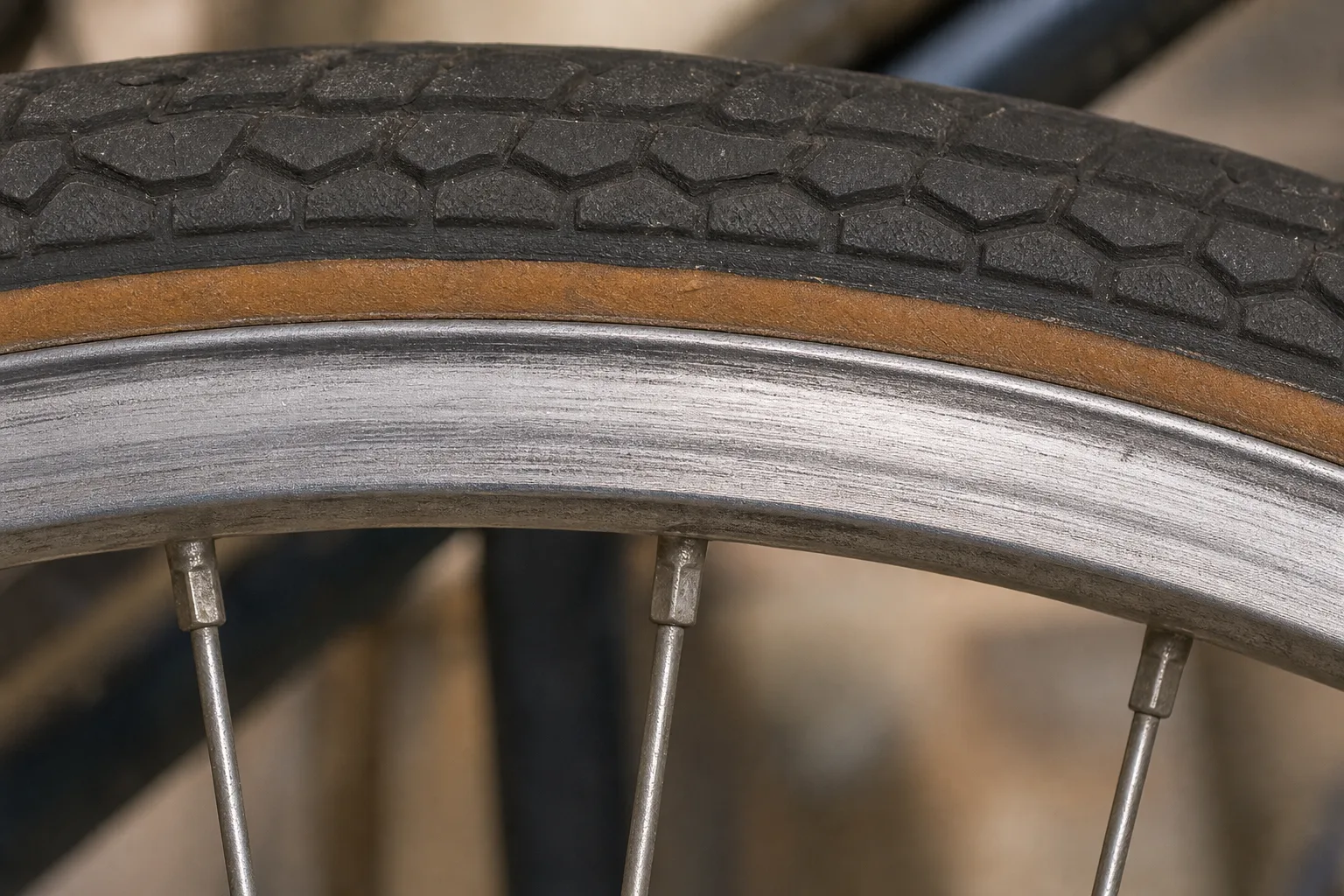
Comfort bikes wear tires unevenly, squared off in the center from pavement and cracked at the sidewall from sitting in a garage through two winters, and dry rot is the failure people miss because tread depth still looks fine. Flex the sidewall with your thumbs and look for a crazed pattern; that casing will fail on a curb strike no matter how much air it holds. Budget a pair of decent puncture-resistant tires and tubes as your first purchase on any used upright, then look past them at the rim, where a worn braking surface goes concave and eventually splits.
3. Cables, housing and pads, the cheap fixes that make a bike feel new
Gritty shifting and a brake lever that comes back slowly are almost always housing, not the shifter, and this is the most satisfying money you will spend on an older upright. A full set of brake and shift cables with new housing, plus four brake pads, runs modest, and an afternoon with a cable cutter does the rest. Internally geared hubs need one shift cable and a correct indicator adjustment rather than a derailleur setup, which is one reason three-speeds age gracefully. Pads glazed hard and shiny should be replaced even if there is material left, since they polish the rim instead of gripping it.
4. Bearings run quietly for years, then announce themselves
Grab each wheel at the rim and rock it laterally, then spin it and listen for the dry gravel sound of a hub that ran without grease. Lift the front wheel, turn the bars slowly, and feel for the notch at dead center that means an indexed headset. Bottom brackets on cartridge-equipped bikes give a knock through the pedals. Loose bearings can often be cleaned, greased and adjusted for the cost of a tube of grease, which is why a rough hub is a bargaining point rather than a walk-away. Cup and cone hubs in particular reward this.
5. What is not worth rescuing, and what to check before you hand over cash
Cracks at the head tube or seat tube weld, a bent fork with paint wrinkled behind the crown, a rear triangle that is out of alignment, a seized seatpost in an aluminum frame, and a rim already dished thin at the brake track: these end the conversation. The Consumer Product Safety Commission is responsible for the federal requirements that bicycles sold in the United States are built to, and a frame that has failed structurally is outside anything a repair can restore. Everything else on a comfort bike is a purchasable part with a known price, which is what makes these bikes such reasonable used buys.
Add it up over three years of short daily trips and the honest tally looks like two or three chains, one cassette, two sets of tires and four tubes, one cable and housing refresh, a couple sets of pads, and one bearing service. Written down in advance, that number is small and predictable, and it is the strongest argument for buying the tired-but-straight bike over the shiny one.